

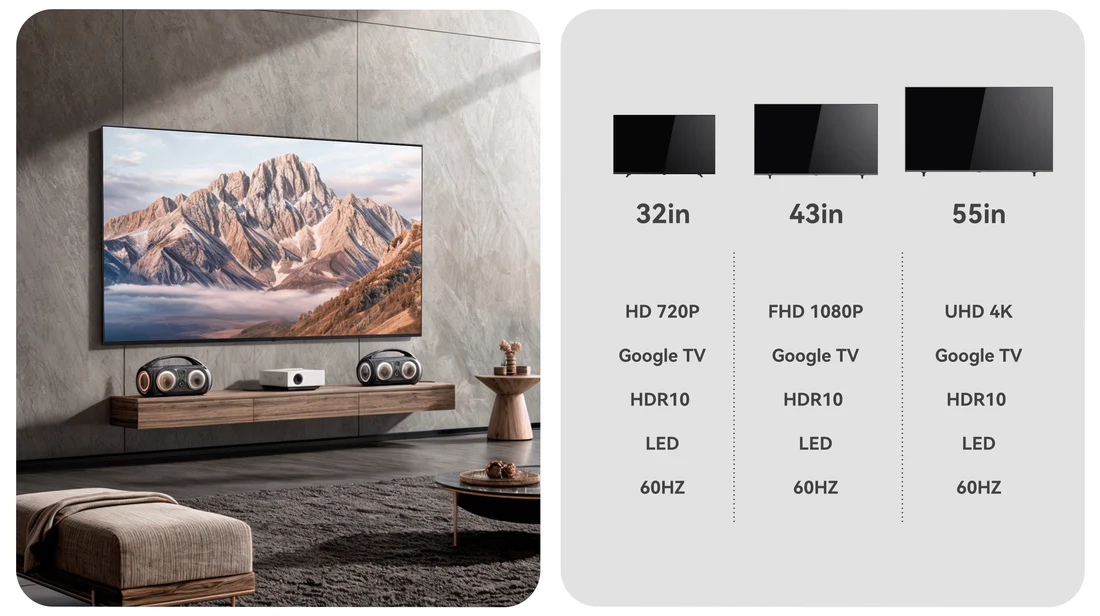
When shopping for a new TV, screen size is often the first number people notice. But what does a 32-inch, 43-inch, 50-inch, or 65-inch TV actually mean? Many shoppers assume the number refers to the width of the TV, but TV sizes are measured differently.
Understanding how TV screen dimensions work can help you choose a model that fits your room, viewing distance, and everyday entertainment needs.
How Is TV Screen Size Measured?
TV screen size is measured diagonally from one corner of the visible screen to the opposite corner. For example, a 50-inch TV means the screen measures 50 inches diagonally, not from side to side.
Most modern TVs use a 16:9 aspect ratio, which means the screen is wider than it is tall. Because of this, the actual width and height will be different from the advertised diagonal size.
Common TV Sizes and Where They Fit Best
Choosing the right TV size depends on your room size, viewing distance, and how you plan to use the TV. A larger screen can feel more immersive, but it also needs enough space to stay comfortable.
32-Inch TV
A 32-inch TV is a good choice for bedrooms, kitchens, dorm rooms, or small apartments. It works well when viewed from about 4 to 6 feet, or around 1.2 to 1.8 metres away. This size is compact, easy to place, and suitable for casual viewing.
40-Inch TV
A 40-inch TV offers more screen space while still fitting comfortably in smaller rooms. It is ideal for bedrooms, small living rooms, or multipurpose spaces, with a recommended viewing distance of around 5 to 8 feet, or about 1.5 to 2.4 metres.
43-Inch TV
A 43-inch TV is a popular option for small to medium-sized rooms. It gives you a more enjoyable viewing experience than smaller models without taking up too much space. It also works well for apartments, gaming setups, or as a second TV at home.
50-Inch TV
A 50-inch TV is a great choice for living rooms, family spaces, and everyday streaming. It offers a noticeable big-screen upgrade while still being easier to fit than larger models. For many homes, a 50-inch TV provides a good balance between immersive viewing and practical room placement.
65-Inch TV
A 65-inch TV is better suited for larger living rooms or dedicated entertainment areas. It provides a more cinematic feel and works best when viewed from around 8 to 13 feet, or about 2.4 to 4 metres away. If you enjoy movie nights, sports, or big-screen streaming, this size can make the experience feel more engaging.
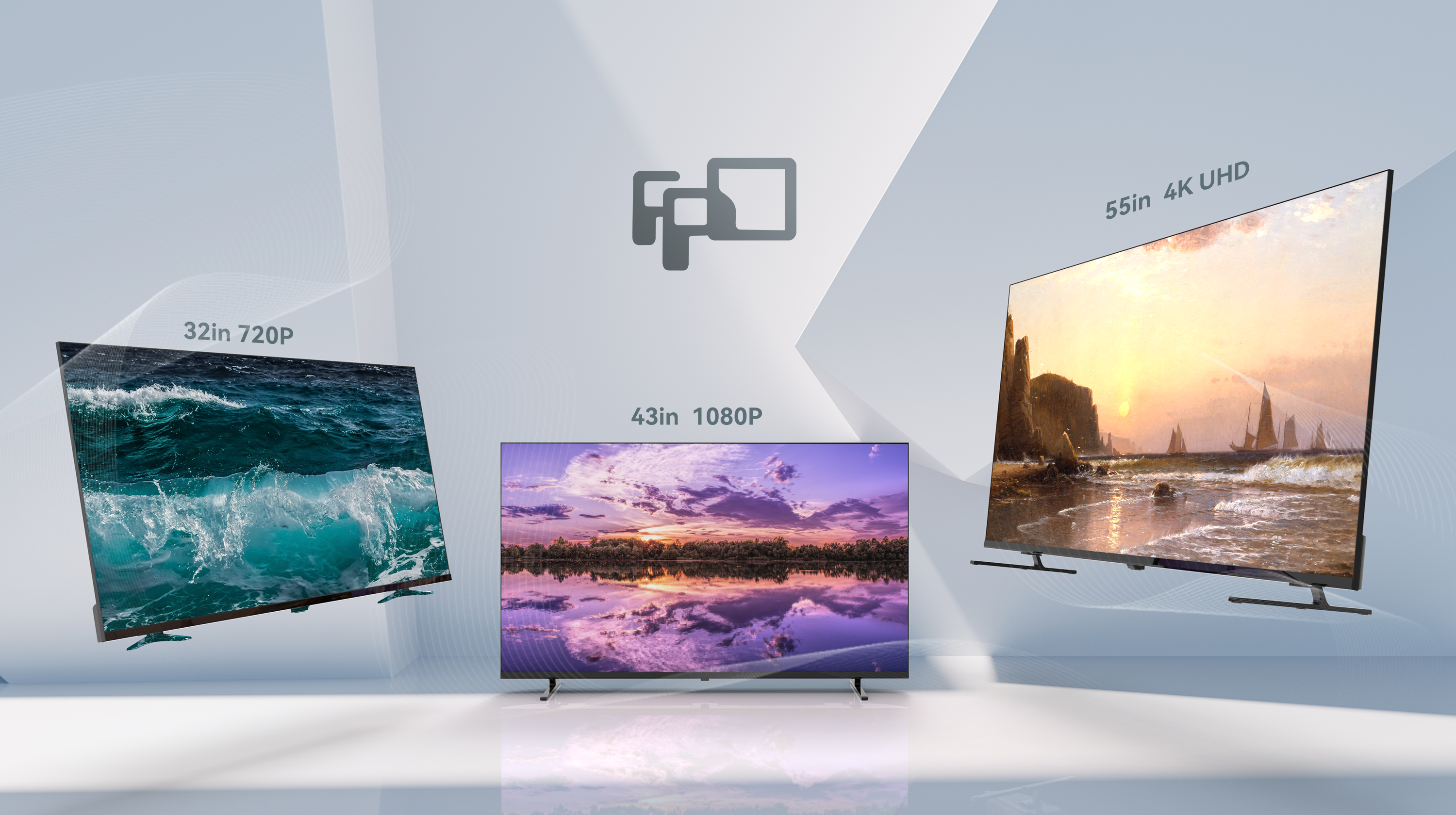
Why Viewing Distance Matters
Bigger is not always better. If a TV is too large for the room, you may need to move your eyes or head too much to follow the image. If it is too small, details may be harder to see from farther away.
As a general rule, smaller TVs are better for closer viewing, while larger TVs work best when you can sit farther back. Matching screen size to viewing distance helps create a more comfortable and natural viewing experience.
Why Resolution Matters for Larger TVs
Resolution becomes more important as screen size increases. On a larger screen, lower-resolution content can look less sharp because the image is spread across a bigger display.
That is why 4K resolution is especially useful for 50-inch, 65-inch, and larger TVs. It helps keep the picture clear and detailed, even on a big screen. For smaller TVs, such as 32-inch or 40-inch models, HD or Full HD may still be enough depending on how far away you sit and what kind of content you watch.
Match TV Size to How You Watch
Different viewing habits may call for different screen sizes.
For movies and series, a 50-inch TV or larger can create a more immersive experience, especially when paired with 4K and HDR support.
For gaming, a 43-inch or 50-inch TV can work well depending on your setup. If you sit close to the screen, a medium-sized TV may feel more comfortable and responsive.
For news, casual shows, or kitchen and bedroom use, a 32-inch to 40-inch TV is often enough. These sizes are practical, easy to place, and suitable for everyday viewing.
Don’t Forget the TV’s Physical Size
Screen size is only one part of the decision. You should also check the full product dimensions, including the frame, stand, and depth. This is especially important if you plan to place the TV on a cabinet or mount it on a wall.
Slim-bezel or frameless TVs can make the screen feel larger while keeping the overall design clean and modern. They also blend more easily into living rooms, bedrooms, and entertainment spaces.
Choose the Right TV for Your Space
The best TV size is not simply the biggest one you can buy. It is the one that fits your room, viewing distance, content habits, and setup.
Before choosing a TV, think about where it will be placed, how far away you will sit, and what you watch most often. Once you understand what TV screen dimensions really mean, it becomes much easier to choose a size that feels right for your home.